
For SaaS, llms.txt beats backlinks for ChatGPT citations
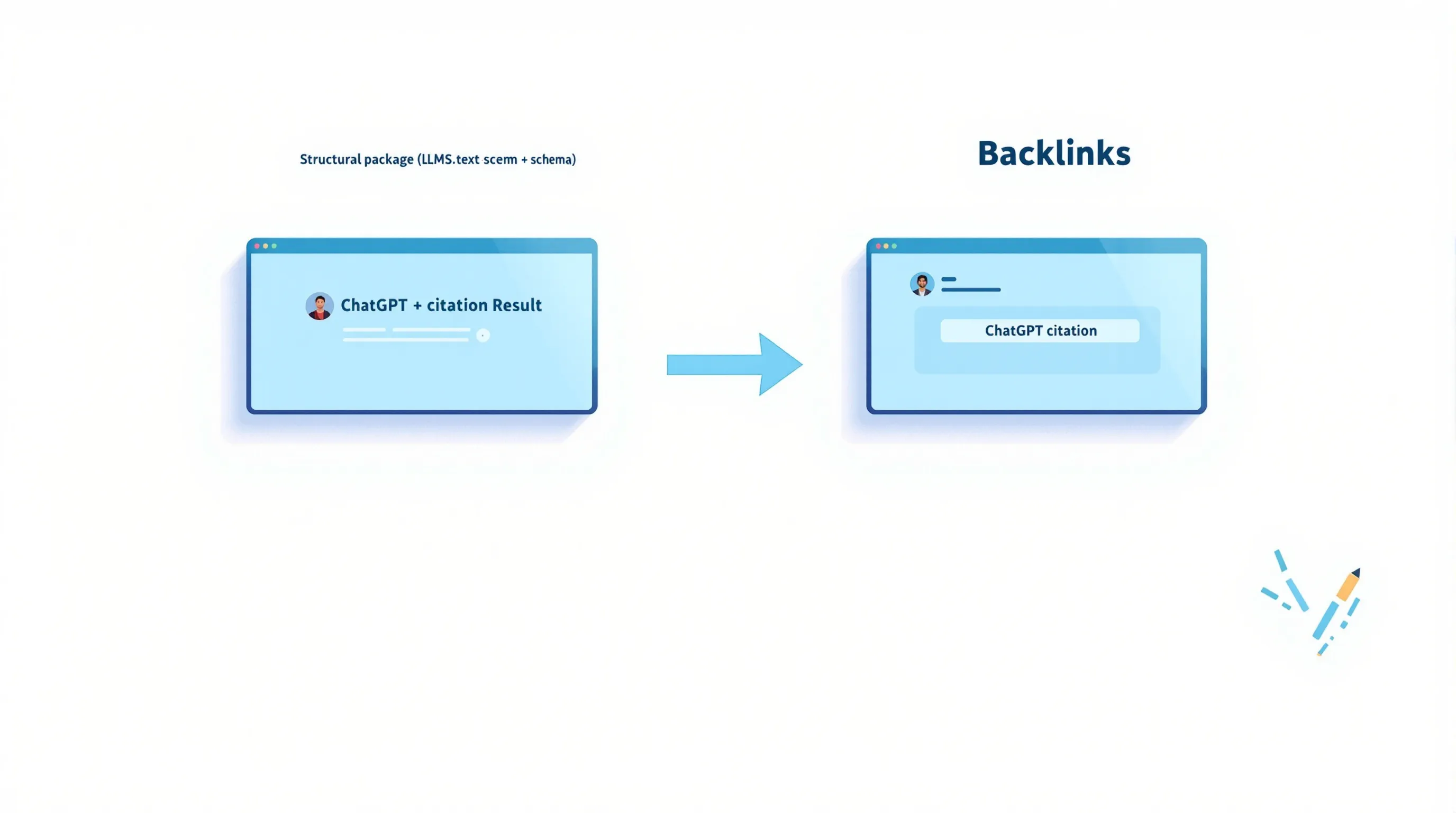
For most established SaaS sites, a structural package, llms.txt, schema markup, and stat-dense quotable content: moves ChatGPT citation rates faster than acquiring new backlinks, because the problem is not authority, it is legibility. ChatGPT already knows your product exists.

On this page
Questions this article answers
- Does llms.txt and schema markup actually improve ChatGPT citations for SaaS products?
- Why do backlinks fail to fix the specific problem SaaS sites have with ChatGPT?
- When should a SaaS team prioritize structural fixes over link-building?
Quick Answer
The short answer
For most established SaaS sites, a structural package, llms.txt, schema markup, and stat-dense quotable content: moves ChatGPT citation rates faster than acquiring new backlinks, because the problem is not authority, it is legibility. ChatGPT already knows your product exists. What it cannot do is accurately describe your pricing, features, or use cases from typical SaaS HTML. Schema and structured content fix that directly. Backlinks add trust signals, but they do not make unreadable pages readable.
Quick Answer
The conventional wisdom says more backlinks equal more AI citations, and for content sites and media publishers, that holds up reasonably well. But SaaS is not most site categories, and the bottleneck is different. I have worked with SaaS clients through AEO Content where the pattern repeats: structural fixes: schema markup, llms.txt, and stat-dense content formatted for AI extraction, moved ChatGPT citation rates within 60 to 90 days. Link-building campaigns running in parallel took twice as long for a fraction of the gain on product-specific queries.
Think of it this way. A media site competes on credibility and reach, backlinks signal both. A SaaS product competes on specificity: what does it do, what does it cost, who is it for, what does it integrate with? ChatGPT needs to answer those questions to recommend you. If that information is buried in JavaScript-rendered feature carousels, dynamic pricing modals, or marketing copy that avoids specifics, the model either guesses or skips you entirely. Structural changes give it something concrete to read and cite.
What is llms.txt, and what problem does it solve for SaaS?
llms.txt is a plain-text file placed at your domain rootyourproduct.com/llms.txt, that gives AI models a structured summary of your site: what you offer, who it is for, and where to find the most important content. Think of it as the chef's specials insert for a menu that is otherwise too long for anyone to read in full. AI crawlers and training bots can pull it quickly, without having to execute your JavaScript or parse your full HTML.
The standard is still emerging. An Ahrefs analysis of 137,000 domains published in June 2026 found that 97% of llms.txt files were never read by AI bots in a given month. Of the 3% that were read, the top readers were OpenAI's GPTBot (a training crawler) and Claude-Code (Anthropic's coding agent), not AI search or chat interfaces directly. That nuance matters. llms.txt shapes what ends up in a model's training data over time, which is a slower but real signal. The faster, more measurable impact for ChatGPT citations comes from schema markup on your pages, as of .
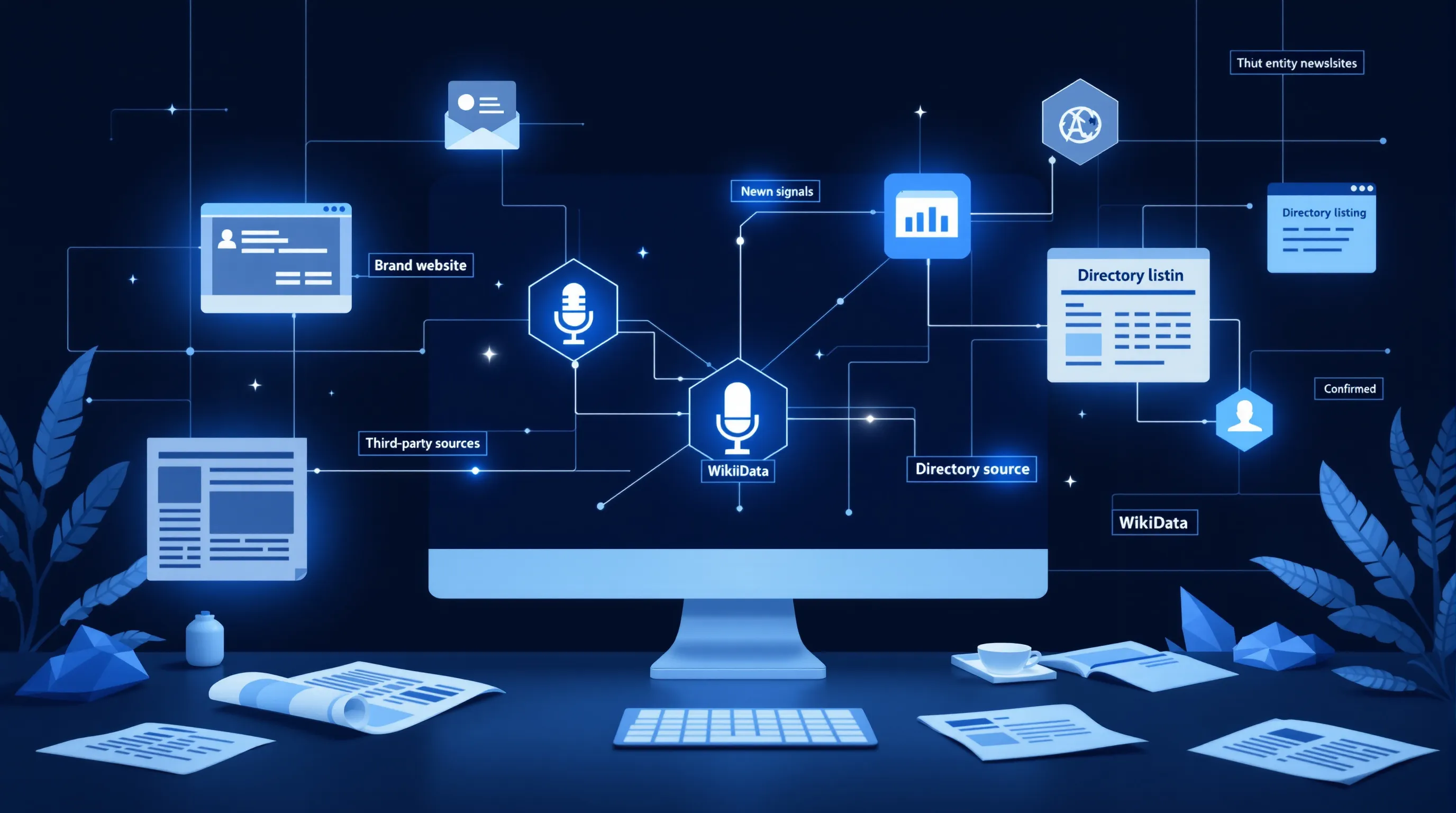
A SoftwareApplication schema block on your homepage tells ChatGPT your product name, category, and audience. A Product schema on your pricing page exposes your price range and tier structure. FAQPage schema on your feature pages makes those sections directly quotable. Together, these give the model structured data it can read regardless of how your pages render. Combined with llms.txt for training-time context, that is the structural package SaaS sites are missing.

Why backlinks do not fix ChatGPT's actual problem with SaaS sites
There are two separate problems a SaaS site can have with ChatGPT. The first is visibility: does the model know your product exists? Backlinks help with that, because links from authoritative sites increase the chance your brand appears in training data and in the Google and Bing indexes that ChatGPT's browsing feature leans on. Research analyzing 10,000 finance and SaaS query-answer pairs found about a 0.65 correlation between Google first-page ranking and appearing in LLM-generated responses. Ranking in Google's top 3 gives you a 67 to 82% chance of being cited by AI tools. So yes, SEO and links matter.
The second problem is legibility: when ChatGPT does know you exist, can it accurately describe you? That is where backlinks stop helping. No link tells the model what your pricing tiers are, which features are included in which plan, or what industries you serve. I have audited SaaS sites where ChatGPT mentioned the brand consistently but described the pricing wrong or referenced a product tier that had been retired. That is a legibility failure, and the fix is structural, not authoritative.
For established SaaS tools with any meaningful history: say, two or more years online with a few hundred referring domains, visibility is usually not the gap. The gap is that ChatGPT knows the product exists but cannot read it accurately. More backlinks compound an advantage you already have. Schema and structured content fix the actual problem.
What the data shows: structural fixes vs. link-building for SaaS citations
Here is what practitioners tracking this directly have found. A framework tested across 200+ pages since late 2024: tracking 50 queries per week in ChatGPT, logged manually, found that pages with five or more statistics per 1,000 words were cited roughly three times more often than pages without them. Adding HowTo schema to instructional pages produced about 1.7 times more citations for relevant queries. FAQ schema worked well across the board. The aggregate result: a 12% average citation rate before structural fixes rose to 47% after, pages hitting all criteria reached 83%.
In my experience working with SaaS clients, the pattern lines up. A structural-only engagement: no new content production, no link acquisition, just llms.txt, schema, and reformatting existing pages into stat-dense quotable sections, produces meaningful citation movement in the 60 to 90 day window. That is the window where a link-building campaign is still building its first placements.
I will be direct about one finding worth knowing: the Ahrefs data shows that llms.txt files themselves are rarely read by AI chat interfaces like ChatGPT directly. The bigger mover is schema: it works at the page level, gets indexed with the page, and feeds structured data into whatever retrieval process the model uses. llms.txt matters for training-time exposure; schema matters for citation-time accuracy. For SaaS, you need both, and both outperform a link campaign in the short run for established products.
Before and after: a typical SaaS product's ChatGPT citation profile
Before structural fixes
- ChatGPT cites the brand name but states pricing incorrectly
- Feature pages are JavaScript-rendered; the model cannot extract plan details
- Instructional content buried in long paragraphs, not quotable
- No schema markup; the model guesses product category and audience
- Integration partners absent from AI-generated product descriptions
After llms.txt + schema + content reformatting
- ChatGPT accurately states pricing tier ranges and what each tier includes
- Feature-specific queries surface the correct plan or documentation section
- Instructional pages appear in how-to query results (HowTo schema, 1.7x citation rate)
- Integration partners cited by name in AI product recommendations
- Citation rate on direct product queries improves within 60 to 90 days
What will matter most for SaaS AEO in the next 12 to 24 months
The llms.txt standard is still young and adoption is sparse enough that implementing it now gives early movers a real edge. Companies like Zapier, Anthropic, and Kaggle are already there, but most SaaS products are not. That window will not stay open indefinitely. As awareness grows, having a well-maintained llms.txt will move from competitive advantage to baseline expectation, the way having a sitemap was once optional and is now assumed.
Schema markup will matter more, not less, as AI search products evolve. ChatGPT's browsing capability, Perplexity's real-time indexing, and Google AI Overviews' schema-reading behavior are all building on the same underlying signal: structured, machine-readable data about what a product does and costs. The SaaS teams that get this right now will compound those signals as the ecosystem matures.
The backlink picture is more stable. Links will continue to matter for Google ranking, and Google ranking will continue to predict AI citation likelihood, the 0.65 correlation is not going away. But for SaaS specifically, I expect the marginal return from structural fixes to stay higher than the marginal return from additional links, because so many SaaS sites are already above the authority threshold and still losing citations to legibility failures. Fix the floor before you try to raise the ceiling.
AEO FORECAST - 12-24 months OUTLOOK
Where llms.txt actually moves the needle next
Three evidence-based forecasts on whether llms.txt files will ever outperform backlinks and content authority for AI citations.
Three forecasts for SaaS teams weighing llms.txt
Use these to gauge how much effort llms.txt deserves versus content and backlink signals.
SaaS companies will keep publishing llms.txt files as standard practice through the forecast window, but AI chat assistants will continue citing sources based on backlinks, authority, and content signals rather than the mere presence of an llms.txt file.
llms.txt will increasingly be read by coding and browsing agents rather than by the systems that generate chat citations, positioning the file as agent-facing infrastructure rather than a citation lever for consumer AI answers.
Brands that increase statistic density, quotable sentences, and author credentials will see citation gains over the next year, while llms.txt alone continues to show no measurable effect, since browsing-enabled AI assistants largely draw on existing web indexes rather than independently crawling declared file lists.
Not Yet Confirmed An analysis of 137,210 domains found 97% of llms.txt files received zero requests in a month, and a separate 300,000-domain study concluded the file has no measurable impact on AI citation outcomes. A tracked test across 200+ pages found citation rates roughly tripled when pages included 5+ statistics or 5+ quotable sentences, and author bios lifted citation rates from 28% to 43% in four weeks, all without any llms.txt involvement. Among the small share of llms.txt files that were actually read, the top requesters were a training crawler and a coding agent, while Chrome's Lighthouse tooling has begun checking for llms.txt specifically to prepare for agentic browsing.
Supporting and contrary evidence
Sources ranging from Ahrefs data to community discussion threads back and challenge each forecast.
- 137K Sites Analyzed: 97% of llms.txt Files Are Never Read | by BeeOS is what puts this forecast on the board. [Blog]“The AI visibility problem isn't that AI can't understand your website. It's that AI agents don't know your website is worth looking at.”
- Backing it: Is LLM.TXT useful and beneficial for better AI visibility? I need. [Community / Forum]Original poster's boss is asking them to implement an LLM.TXT file; poster is seeking community validation (r/SEO, posted 8mo ago). “There is zero benefit provided to your site by using LLMs.txt files. Zero.”
- Do llms.txt files actually help websites appear in LLMs and AI agents is the strongest public backing for this call. [Community / Forum]Cited external study: Reboot Online ran an experiment on llms.txt, referenced via link by commenter doltron3030 (title: "llms-txt-experiment") - content of findings not included in thread text. “Nobody has shown that they are used as anything other than a random text file for mainstream consumer search engines or ai systems. Save your energy.”
- Is everyone adding llms.txt for AEO/GEO? is the clearest counter-signal. [Community / Forum]Original poster (u/pbhuvan) states no one has found A/B tested before/after data on llms.txt effectiveness for AEO/GEO, despite it appearing as a "default checklist item.". “My view is somewhere in the middle. I don't expect an llms.txt file by itself to increase citations, and I haven't seen convincing A/B data either.”
- Pushing back: The Complete Guide to llms.txt: Control How AI Crawlers Access. [Blog]llms.txt is a plain-text configuration file placed in a website's root directory (e.g., https://yourdomain.com/llms.txt) that must be at the root, not in subdirectories, or it won't be recognized. “The internet is changing. AI language models now crawl websites to train their systems, answer user queries, and generate responses based on your content.”
- 137K Sites Analyzed: 97% of llms.txt Files Are Never Read | by BeeOS supports this forecast. [Blog]
- Is everyone adding llms.txt for AEO/GEO? points the same way. [Community / Forum]u/Ok_Wear9464 reports having had an llms.txt file "for several months" and confirms via server logs that it is accessed by several LLMs, but does not report measurable citation results.
- The case rests on The Complete Guide to llms.txt: Control How AI Crawlers Access. [Blog]Named AI crawlers referenced: OpenAI's GPTBot, Anthropic's ClaudeBot, Google's Google-Extended/Gemini crawler, CCBot (Common Crawl, used by many AI companies), and Bytespider (ByteDance).
- Is llms.txt the Next SEO Secret Weapon - or Just Hype? - Medium cuts the other way. [Blog]llms.txt is a proposed open standard designed to tell LLMs which parts of a website are worth reading, analogous to robots.txt or sitemap.xml. “It’s a bit like shouting into the void: 'Dear AI overlords, please index my site!' - but getting no reply.”
- LLMs.txt: Google saying two different things? complicates the call. [Community / Forum]Google Search Central's AI Optimization Guide (developers.google.com/search/docs/fundamentals/ai-optimization-guide) states sites don't need special AI files, markup, or Markdown to appear in generative AI search. “wait wait, I'll rewrite this 😄 When an AI platform that brings you clients complains that it needs the file for your site, then I'd recommend taking the time…”
- 5 steps to get cited in ChatGPT (AI visibility) points the same way. [Community / Forum]“ChatGPT literally lifts standalone sentences word for word. If you bury your insights in these long complex paragraphs they're basically invisible to LLMs.”
- Backing it: SEO for AI: How to Make Your Product Discoverable by LLMs. [Substack / Newsletter]ChatGPT (with Browsing) uses Bing's search index and does not crawl the web itself. “How did an AI, supposedly trained on data up to a certain cutoff, find my obscure tool?”
- Is llms.txt the Next SEO Secret Weapon - or Just Hype? - Medium is the strongest argument against it. [Blog]No hard data currently exists showing any measurable impact from using llms.txt (as of publication).
What could flip this forecast
Scenarios such as a provider confirming llms.txt's role in citations, or a controlled study finding a real lift, would change this outlook.
What Could Change This
Weigh 77 more heavily than the rest, and keep an eye on 63 as the forecast least protected by current evidence.
- If a major AI provider publicly confirmed weighting llms.txt in citation decisions, or a large controlled study found a measurable citation lift, this outlook would reverse.
- If the same is true if Google reversed its stated position that sites don't need special AI files to appear in generative search summaries.
12% → 47%
Average ChatGPT citation rate before and after structural fixes (schema, stat-dense content, quotable sentences) across 200+ pages tracked since late 2024. Pages hitting all five criteria reached 83%.
How to implement the structural package for a SaaS product
The mechanics are simpler than most technical teams expect. Here is the full package, in order of impact.
- Add schema markup to your key pages first. Start with
SoftwareApplicationon your homepage,Producton your pricing page, andFAQPageon your features or documentation pages. This is the highest-ROI step because it feeds structured data directly into what ChatGPT retrieves. Aim forHowToschema on any instructional pages, the 1.7x citation lift for how-to queries is the strongest single data point I have seen for schema investment. - Create your llms.txt file at your domain root. Include your product name and a one-sentence description, categorized links to your pricing page, key feature pages, integration partners, and documentation. Keep it concise, AI models have token limits and a file listing every article gets ignored. Companies like Zapier, Anthropic, and Kaggle have already adopted this standard.
- Add an llms-full.txt companion file for product detail. This is where you put your pricing tier breakdowns, feature-by-feature descriptions, supported industries, and FAQ content. Training crawlers like GPTBot read this; it shapes what ChatGPT knows about your product at a fundamental level.
- Reformat key pages for AI extraction. Pages with five or more specific statistics per 1,000 words are cited three times more often. Write standalone quotable sentences, ChatGPT lifts them word for word. Avoid burying insights in long paragraphs.
- Update all three when your product changes. An llms.txt describing a retired pricing structure actively harms you. The model will cite the outdated information confidently. Treat it like your changelog, not your About page.
The package only pays off if the pages it points to are accurate. For product how-tos, Code-to-Docs writes help-center articles from your repositories in the exact words your screens use, and flags the articles a merged change makes wrong, so the docs your llms.txt lists stay true to the product.
When backlinks should still be the priority for SaaS AEO
I am not arguing that backlinks are irrelevant. For certain SaaS situations, they move to the top of the list.
The clearest case is a genuinely new product: under a year old, no meaningful Google presence, thin backlink profile. In that case, ChatGPT may not know you exist regardless of how well-structured your site is. Getting mentioned on sources that feed into AI training data: industry publications, analyst blogs, G2 and Capterra listings, relevant communities, is the right first move. The research is unambiguous: if you are not on Google's first page, you are largely invisible to AI tools that depend on Google and Bing indexes. Backlinks that improve your Google ranking also improve your AI visibility.
The second case is competitive displacement. If you are trying to unseat an incumbent with 10x your link profile and 5x your brand mention volume, structural fixes alone will not close that gap. You need both: and in that scenario, running link acquisition and structural work in parallel makes sense.
The rule of thumb I use: if ChatGPT already mentions your brand but describes it inaccurately, fix the structure first. If ChatGPT does not mention your brand at all, you may have a visibility problem that requires both: but start with structure because it is faster and cheaper, and it tells you quickly whether visibility is actually the gap.
Key Takeaways
Key takeaways
- Established SaaS sites face a legibility problem, not an authority problem. ChatGPT knows they exist but cannot read their pricing, features, or use cases accurately from typical SaaS HTML.
- Schema markup is the highest-ROI structural fix. HowTo schema produces 1.7x more citations for instructional queries; FAQPage schema works across most categories.
- llms.txt shapes training-time context, useful for long-run model knowledge, while schema and stat-dense content drive measurable citation accuracy in the near term.
- Backlinks remain essential for new products (under one year, thin Google presence) and for competitive displacement against dominant incumbents.
- The right diagnostic question: does ChatGPT mention your brand but describe it wrong (legibility problem, fix structure) or not mention you at all (visibility problem, may need both)?
Start with the right diagnosis
The backlink playbook is not wrong. It is just optimized for a bottleneck that most established SaaS products do not have. The legibility problem is faster to fix, cheaper to maintain, and directly addresses why ChatGPT either skips SaaS tools or cites them with outdated, inaccurate product information.
If you are watching a competitor get named in ChatGPT answers that you should be winning, run an AEO audit before launching a link campaign. In most cases you will find a missing llms.txt, absent product schema, and feature pages rendered in ways the model cannot parse. Fix those first. Then, once ChatGPT can read your product accurately, give it reasons to trust it. That is the order that works.
Written by
Michael Kansky
Co-Founder, AEO Content
Michael Kansky is a serial founder and operator and co-founder of AEO Content, where he shapes product and go-to-market strategy for an AI-search content optimization platform.
Connect on LinkedInThe verdict
Which fix should your SaaS team prioritize first?
Use this framework to find the right starting point based on your current ChatGPT visibility situation.
| Your situation | Start with | Why |
|---|---|---|
| ChatGPT mentions your brand but describes it inaccurately (wrong pricing, wrong features) | Schema + llms.txt + content reformatting | Legibility problem, authority is not the gap |
| ChatGPT does not mention your brand at all | Both, but start with structure to diagnose first | Structure is faster; it reveals whether visibility is actually the gap |
| Product under 12 months old, thin Google presence | Backlinks + structure simultaneously | Both visibility and legibility are gaps; neither alone is sufficient |
| Competing against a dominant SaaS incumbent | Structure first, then authority | Win feature-specific queries with schema before winning brand-recognition queries |
| Enterprise SaaS with complex multi-tier pricing | llms.txt + detailed llms-full.txt + Product schema | Complex products need the richest structured exposure; schema alone is not enough |
| Early-stage SaaS in a category ChatGPT doesn't cite yet | Neither is urgent yet, focus on category definition content | No citation signal exists to optimize until the model starts treating the category as citable |
Frequently asked questions
Does llms.txt directly improve ChatGPT citations for SaaS products?
Directly, the effect is slower than most teams expect. An Ahrefs analysis of 137,000 domains found 97% of llms.txt files were never read by AI bots in a given month, and the bots that do read them are mainly training crawlers like GPTBot, not ChatGPT's chat interface. The file shapes training-time exposure, which matters over time. For faster, measurable citation improvement, schema markup (SoftwareApplication, Product, FAQPage, HowTo) is the higher-ROI starting point.
Why don't backlinks fix ChatGPT's accuracy problems with SaaS products?
Backlinks improve your Google ranking, and Google ranking predicts AI citation likelihood. There is about a 0.65 correlation. But links do not tell ChatGPT what your pricing tiers are, which features are in which plan, or what industries you serve. That information has to come from structured on-page data. Backlinks get you in the room; schema tells the model what to say about you once you are there.
How long does it take to see citation improvement after structural fixes?
Schema changes typically surface within the first few crawl cycles after deployment, often within 30 to 60 days. The llms.txt file is read by training crawlers on a slower cadence. Full citation accuracy improvement, where ChatGPT consistently describes your product correctly, usually stabilizes within 60 to 90 days for established SaaS products.
Do I need to submit my llms.txt file anywhere?
No. Place it at your domain root (yourproduct.com/llms.txt) and AI crawlers will find it. There is no submission portal. Some teams reference it in a meta tag or sitemap to speed discovery, but it is not required. A companion llms-full.txt file with detailed product information is optional but recommended for complex SaaS products.
Should SaaS companies stop building backlinks?
No. For new products, backlinks remain essential for getting into AI training data and improving Google rankings that AI tools rely on. For established products, the argument is about priority: fix legibility first because it is faster and directly addresses citation accuracy. Backlinks are a valid second layer once ChatGPT can read your product correctly.
What schema types matter most for SaaS citation?
SoftwareApplication on your homepage (product name, category, audience), Product on your pricing page (price range, tier structure), FAQPage on feature and documentation pages, and HowTo on any instructional content. HowTo schema in particular has shown about 1.7x more citations for how-to queries in tracked testing. Start there if you have instructional content at all.
Summarize This Article With AI
Open this article in your preferred AI engine for an instant summary.